Vaginal Probiotics vs. Boric Acid:
It usually starts small. A little itch, a faint change in odor, maybe discharge that doesn't look quite right. At first, you brush it off. But then it lingers, and suddenly it feels like your whole balance is off. That's when the panic sets in: what's happening down there, and how do I fix it fast?
When it comes to supporting vaginal balance, two options come up again and again: boric acid suppositories and vaginal probiotics. Both have a role, but they're built for very different jobs.
Boric Acid: The Reset Button
Boric acid suppositories have been used for over a century to help bring vaginal pH back down when symptoms show up. By making the environment more acidic, they create conditions that are less hospitable to the organisms behind odor and irritation.
They're most often reached for during:
- Stubborn or repeat episodes of BV or yeast
- Odor changes after a period or after sex
- Sudden flare-ups of discharge and irritation
A few things worth knowing. Boric acid isn't FDA-approved for vaginal use, though it does appear in CDC treatment guidelines for recurrent BV and resistant yeast infections, and doctors prescribe it off-label all the time. It isn't recommended during pregnancy. And it's not built for continuous use. Common side effects include local irritation, watery discharge, and a gritty feeling during sex.
Think of it as an emergency reset, not a routine.
Vaginal Probiotics: The Daily Defense
Probiotics work on a different timeline. Instead of a sharp correction, they add beneficial bacteria like Lactobacillus directly to the vaginal environment, supporting the flora your body already relies on.
The difference is that probiotics aren't trying to reset your pH. They're working to maintain it. That makes them gentle enough for regular use, and it's why they fit into a routine rather than a course.
That distinction matters more than it sounds. Boric acid stops working the day you stop using it. A probiotic gel is what you keep using afterward, so there's still something supporting your balance once the flare-up is behind you.
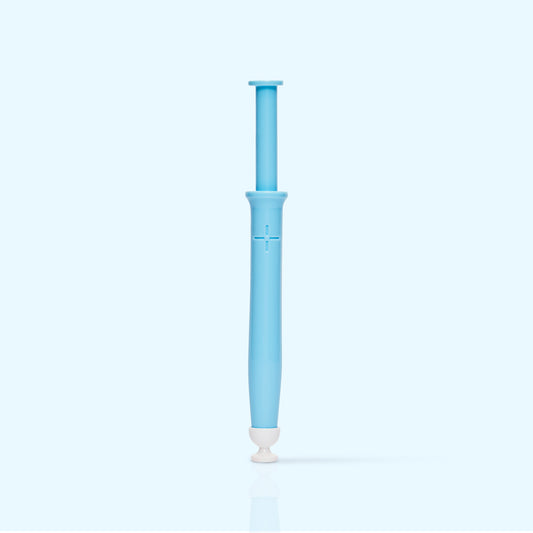
Because it's applied directly, a gel acts right where the balance actually lives. That's also why formula matters. Look for something free of fragrance, parabens, and dyes, with Lactobacillus strains and a pH in the range your body naturally maintains. Our Intimate Care Gel was developed for exactly this role: patented Lactobacillus, a 9-free formula, single-dose packaging.
So, Which One Do You Actually Need?
They aren't competitors. They're answers to different questions:
- Reach for boric acid when something is actively off and you want a short, targeted correction.
- Reach for a probiotic gel when your goal is staying balanced over time, especially around your period, after antibiotics, or after intimacy.
- Use both, at different moments, if you tend to flare and then relapse. Reset when you need to, then maintain.
But if you're only going to pick one, pick the one that's still working next month. Most women don't struggle with clearing a flare-up. They struggle with the one that comes back. A reset handles the moment in front of you. A daily probiotic gel is what changes the pattern.
One thing worth saying plainly: if symptoms keep returning, please see a doctor. Repeat episodes deserve a real diagnosis, and neither of these is a substitute for one.
Boric acid is the reset button. A probiotic gel is the daily defense. Knowing which one you're reaching for, and why, makes the whole thing much less confusing and much more manageable.
References
- Bradshaw CS, Morton AN, Hocking J, et al. High recurrence rates of bacterial vaginosis over the course of 12 months after oral metronidazole therapy and factors associated with recurrence. The Journal of Infectious Diseases. 2006;193(11):1478-1486. https://pubmed.ncbi.nlm.nih.gov/16652274/
- Data on safety of intravaginal boric acid use in pregnant and non-pregnant women: a narrative review. https://pmc.ncbi.nlm.nih.gov/articles/PMC10100571/
- BASIC study: is intravaginal boric acid non-inferior to metronidazole in symptomatic bacterial vaginosis? Study protocol for a randomized controlled trial. https://www.ncbi.nlm.nih.gov/pmc/articles/PMC4514959/
- Amabebe E, Anumba DOC. The vaginal microenvironment: the physiologic role of lactobacilli. Frontiers in Medicine. 2018;5:181. https://www.frontiersin.org/journals/medicine/articles/10.3389/fmed.2018.00181/full
- Hill C, Guarner F, Reid G, et al. The International Scientific Association for Probiotics and Prebiotics consensus statement on the scope and appropriate use of the term probiotic. Nature Reviews Gastroenterology & Hepatology. 2014;11(8):506-514. https://www.nature.com/articles/nrgastro.2014.66